
A carrier asked for your Texas appointment roster last Tuesday. Simple request. Should take five minutes.
But your CRM says you have 47 producers in Texas. Your PAS shows 52 policies with Texas-based writers. Your compliance spreadsheet lists 44 active appointments. And when you pull NIPR data, you find 49 licenses.
Four numbers. Four systems. Zero confidence in any of them.
Therefore, you spend three days reconciling spreadsheets, cross-referencing portals, and manually verifying appointments—just to answer a question that should have taken five minutes. And you're still not sure you got it right.

The data drift problem
Every MGA starts with the same fantasy: we'll have one system that does everything. But that's not how it works in practice.
Your CRM tracks producer relationships—who they are, when they joined, what their pipeline looks like. Your PAS tracks policies—what's been written, by whom, in which states. Your compliance tool (or spreadsheet) tracks licenses, appointments, and expirations.
These systems serve different purposes. But here's the problem: they all contain overlapping producer data, and they almost never agree.
A producer updates their address in the CRM but not the compliance system. Someone adds a new state license in NIPR, but it doesn't sync to your PAS. A carrier confirms an appointment, but the confirmation sits in someone's email instead of updating the master record. Therefore, your data drifts apart slowly—so slowly you don't notice until someone asks a question you can't answer.
I've watched MGAs operate for years with three different "sources of truth" that all tell different stories. Everyone knows the data is messy. But cleaning it up is never urgent—until an auditor arrives and you can't prove what you think you know.

Compliance lives in the cracks
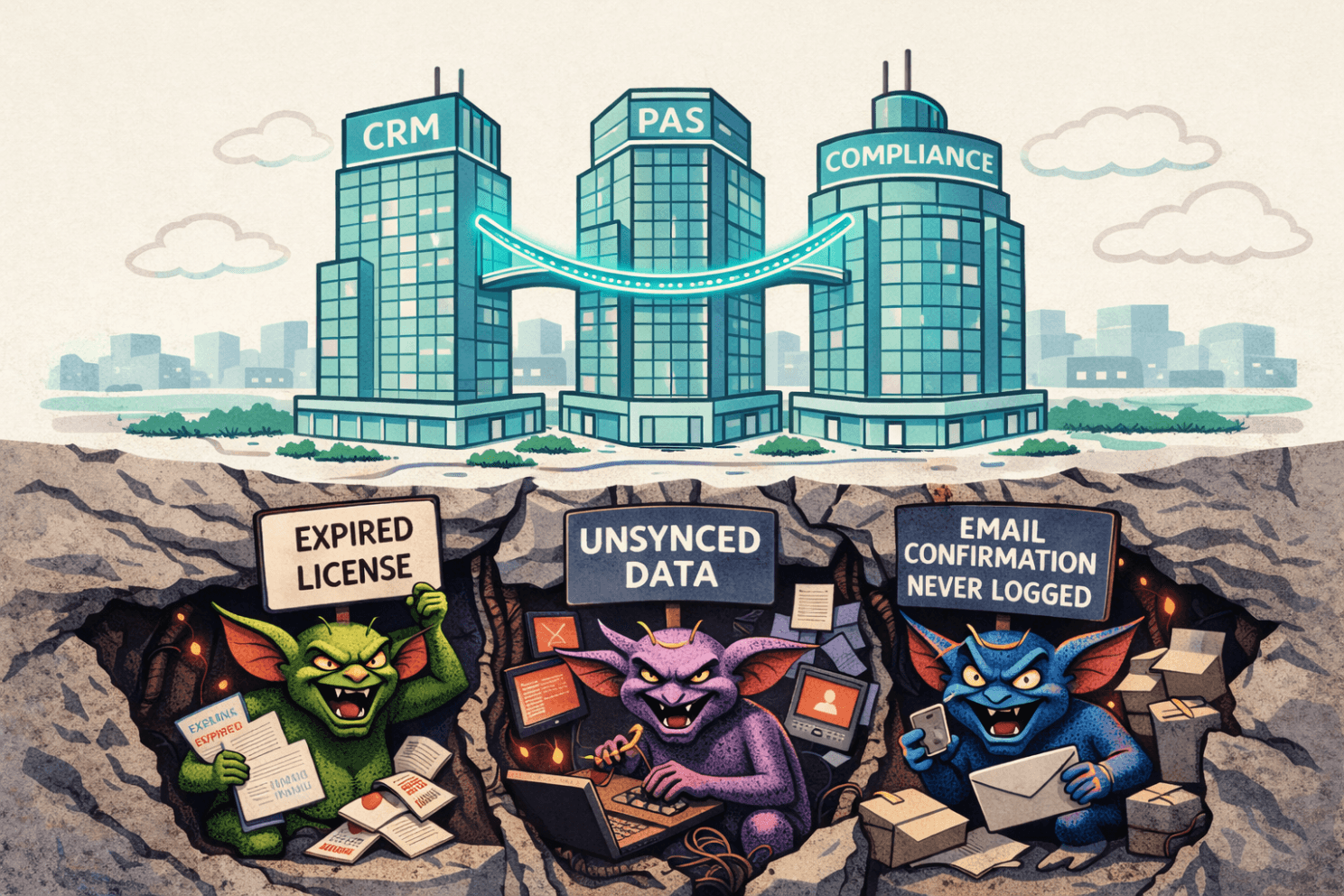
Here's what I've learned the hard way: compliance failures rarely happen because someone broke a rule. They happen because the systems didn't talk to each other.
A producer's license expires in NIPR. But your PAS doesn't pull that data automatically, so policies keep getting bound. Your compliance tool flags the expiration, but nobody sees the alert because it's buried in a daily digest email. Therefore, you have unlicensed transactions in your book—not because anyone did anything wrong, but because the systems weren't connected.
The gaps between your systems are where compliance risk lives. Every manual handoff, every data field that exists in two places, every sync that runs "nightly" instead of real-time—those are your exposure points.
And the more systems you add, the more cracks you create. I've seen MGAs buy a new tool for every problem—one for licensing, one for appointments, one for E&O tracking, one for background checks—and end up with six systems that each contain partial information. Therefore, answering any compliance question requires pulling data from multiple sources and manually reconciling it.
That's not a compliance program. That's a research project.
Anatomy of a single source of truth
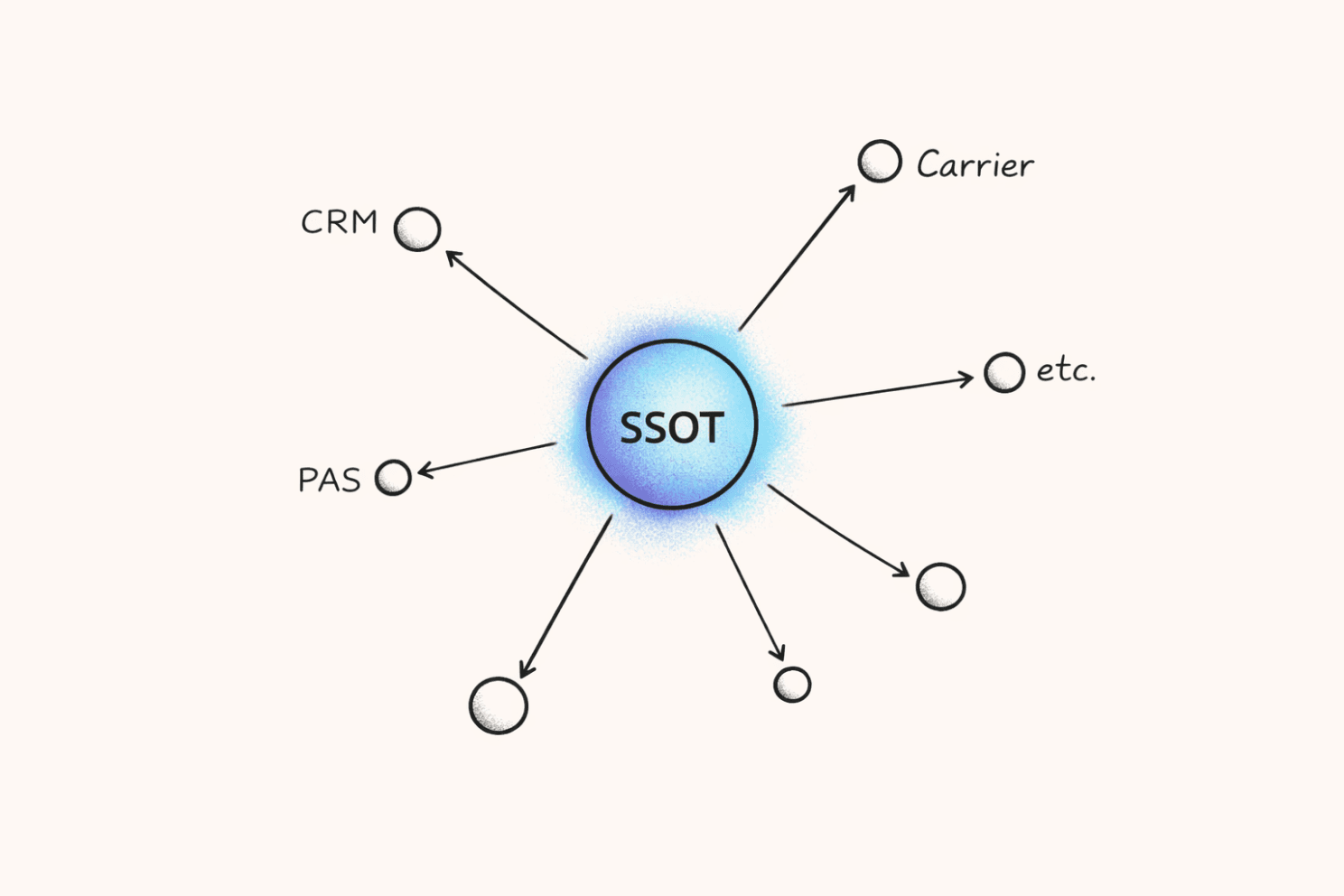
A real source of truth isn't just a database. It's an architecture decision about where authoritative data lives and how everything else syncs to it.
For compliance purposes, you need four things in your SSOT:
Licenses. Every producer's resident license, non-resident licenses, expiration dates, and status—pulled from NIPR or equivalent authoritative sources, not manually maintained. If someone's license lapses, your system should know before you do.
Appointments. Which producers are appointed with which carriers in which states, with confirmation dates and status. This needs to reflect both what you've submitted and what carriers have actually processed—because those aren't always the same thing.
Authority levels. What can each producer actually do? Binding authority limits, approved lines of business, geographic restrictions. This should connect to your actual workflow so authority isn't just documented—it's enforced.
E&O coverage. Current certificates, expiration dates, coverage limits. If a producer's E&O lapses, you should know immediately—not when you're assembling an audit packet.
The question isn't whether you track these things. Most MGAs do, somewhere. The question is: do they live in one place, with one version of the truth, that everything else references?
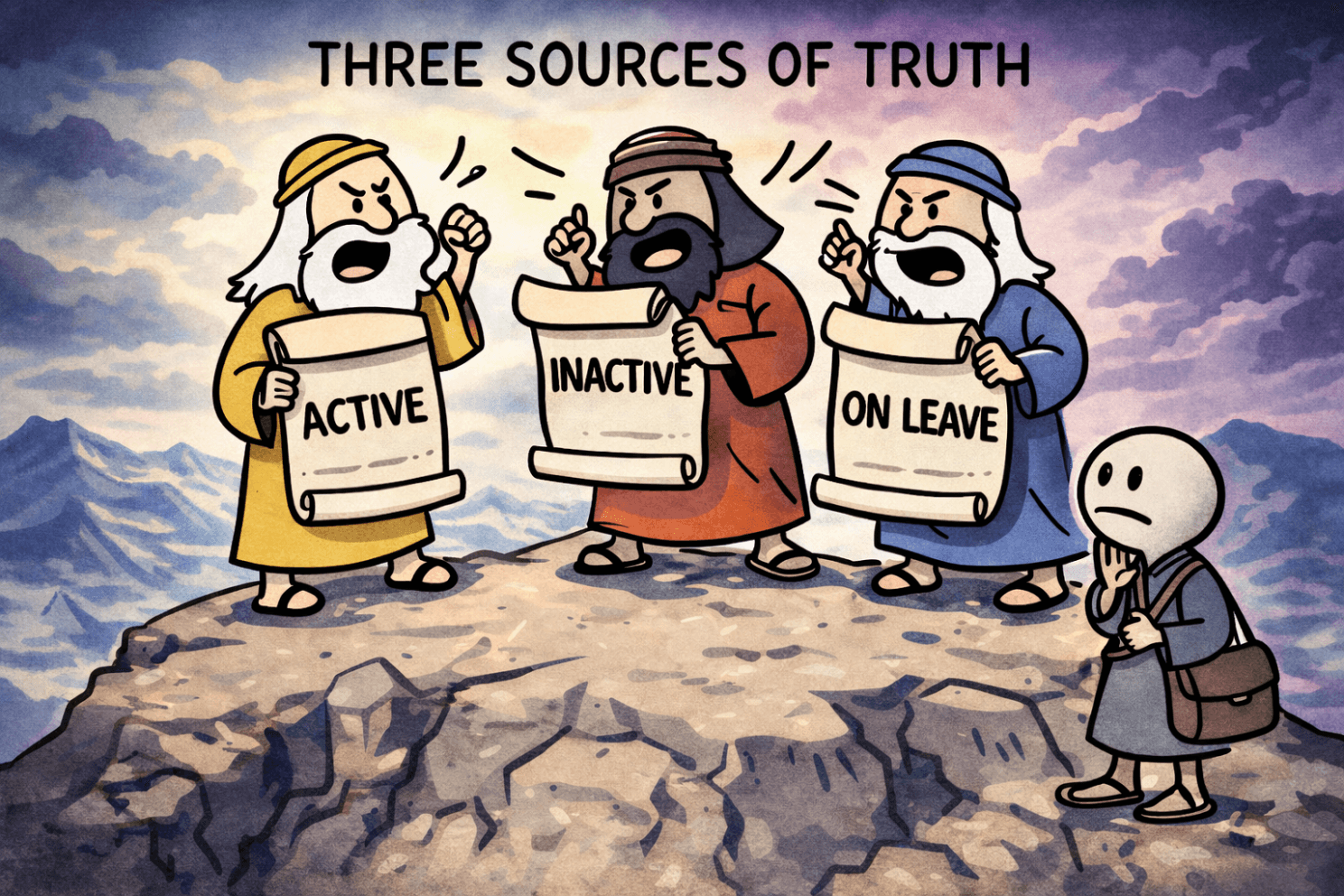
If your compliance tool says a producer is active, but your PAS has them as inactive, but your CRM shows them as "on leave"—you don't have a source of truth. You have three opinions.
What actually helps
The market has options now. Modern compliance platforms can pull NIPR data automatically, track appointments across carriers, monitor E&O expirations, and sync with your PAS and CRM. Some do this well. Some do it expensively.
But here's where I've seen MGAs waste money: buying a platform that promises to be the "single source of truth" but doesn't actually integrate with anything. They'll give you a beautiful dashboard showing license data—but if that data doesn't flow into your PAS to block unlicensed transactions, what's the point? Therefore, you end up with yet another system to check, another place where data can drift, another reconciliation project every quarter.
The expensive legacy players love to sell "enterprise compliance solutions" that require six-month implementations and custom integrations that never quite work right. You pay premium prices for the promise of integration, but end up with a system that's fundamentally disconnected from your actual operations. That's not a source of truth—it's an expensive second opinion.
What you actually need is simpler: a compliance tool that syncs bidirectionally with your core systems, updates in real-time or near real time, depending on integration constraints, and serves as the authoritative record that everything else trusts.
If your PAS needs to verify a producer is licensed and appointed before binding a policy, it should query your compliance system—not maintain its own separate copy of that data. One source, many consumers. That's the architecture that actually works.
What you actually need is simpler: a compliance tool that syncs bidirectionally with your core systems, updates in real-time (or close to it), and serves as the authoritative record that everything else trusts.
A well-implemented modern platform (like Producerflow) can absolutely make your life easier here—if it’s deployed as the system of record and integrated into your operational workflows, not treated as a standalone dashboard.
The audit challenge checklist
Want to test whether you actually have a single source of truth? Run this exercise. Time yourself.
Challenge 1: The roster test
"Show me every producer currently appointed with Carrier X in State Y, with their license expiration dates and E&O status." Can you answer this in under 5 minutes without opening multiple systems? If not, you don't have an SSOT.
Challenge 2: The timeline test
"Show me the compliance history for Producer Z—every license change, appointment status update, and E&O renewal for the past 24 months." If you have to reconstruct this from emails, spreadsheets, and carrier portals, you're not audit-ready.
Challenge 3: The discrepancy test
Pick any 10 producers. Compare their status in your CRM, PAS, and compliance system. Do all three agree on: active/inactive status, current state licenses, and carrier appointments? If even two of them disagree, multiply that error rate by your total producer count. That's your data drift exposure.
Challenge 4: The real-time test
Have someone update a producer's status in your compliance tool. How long until that change reflects in your PAS? Your CRM? If the answer is "whenever someone remembers to update it manually," you don't have integration—you have parallel systems.
Challenge 5: The authority test
"If a producer tried to bind a policy above their authority limit right now, would your system block it or just report it afterward?" If it's the latter, your compliance data isn't connected to your operations. You're documenting failures, not preventing them.
No regulator or carrier expects instantaneous synchronization across every system. What they expect is consistency within a defined tolerance—and clear evidence that your organization understands and manages that latency intentionally.
Building it right
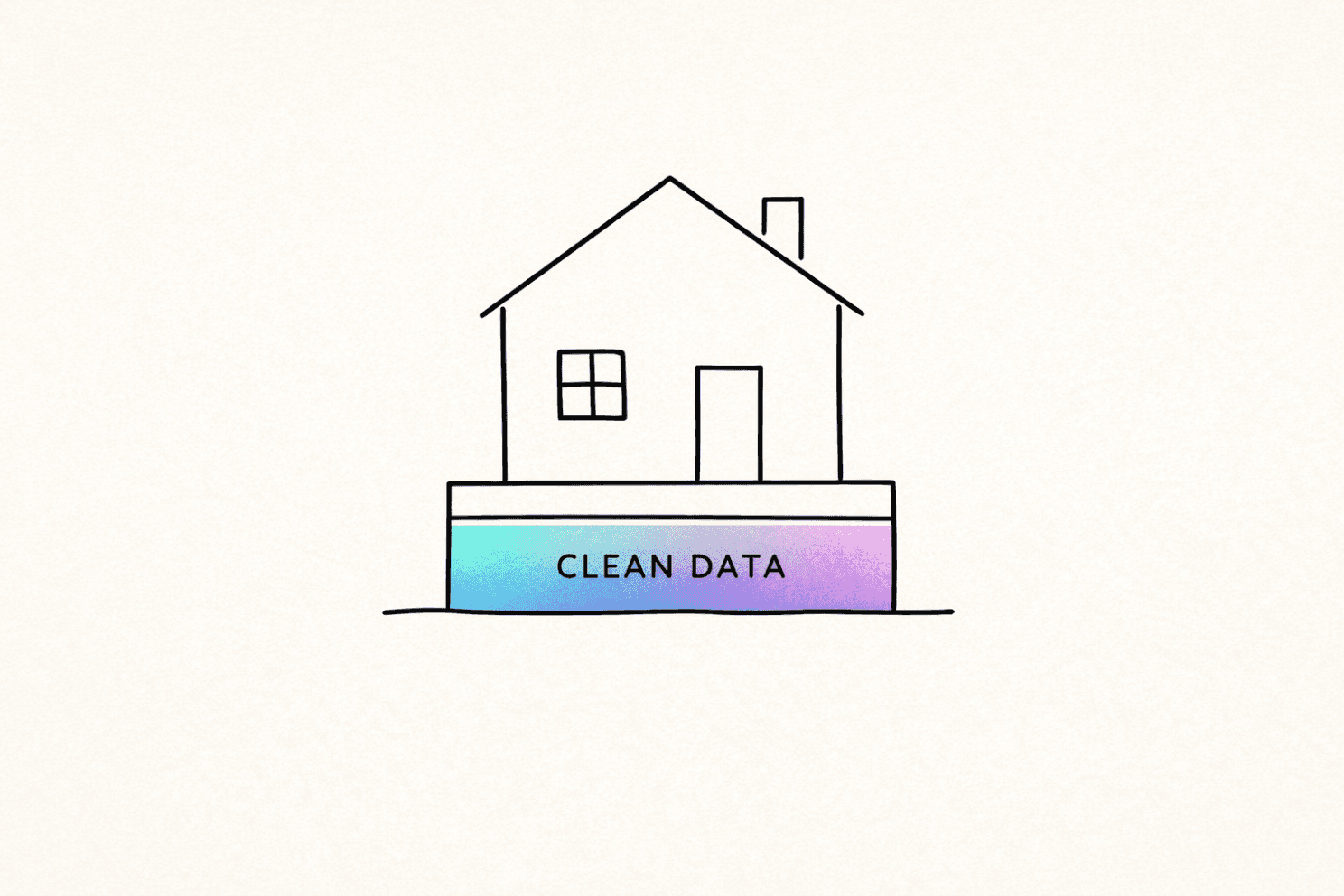
You don't need perfect data to start. But you do need to decide what your source of truth is and commit to it.
The goal isn’t perfect data it’s defensible confidence. Auditors don’t expect zero discrepancies. They expect you to know where your data comes from, how it’s maintained, and how quickly you can identify and resolve gaps.
Pick one system to be authoritative for compliance data. Probably your compliance platform, but it could be a well-designed database if you have the technical resources. Everything else—CRM, PAS, carrier portals—either feeds into it or reads from it—not both, except in tightly governed bidirectional integrations
Build the integrations properly, even if it takes longer. In most compliance-critical workflows, a real-time API sync is worth more than a nightly batch job. The upfront investment pays off every time you can answer an auditor's question in five minutes instead of five days.
And audit your own data quarterly. Run the challenge checklist above. Find the discrepancies before someone else does. Because clean data isn't just an operational convenience—it's the foundation of being able to prove, at any moment, that you're actually compliant.
A real source of truth doesn’t just make audits easier—it caps the blast radius of mistakes by ensuring they’re caught once, centrally, instead of replicated across systems.
Authors: Michelle Bothe & Ido Deutsch
About Producerflow
Producerflow is a modern platform designed to simplify producer management for insurance carriers, MGAs, and large agencies. By centralizing onboarding, compliance, licensing, and data integrations, Producerflow helps teams reduce operational friction, mitigate regulatory risk, and scale distribution with confidence.
Published
