
Your top producer in Texas just got a license suspension notice. Not for a complaint—for missing a CE deadline that wasn't on anyone's calendar. The course was completed. But it didn't count toward the right requirement period.
Why this keeps happening
Most MGAs track CE completion dates. But states don't care when producers finished courses—they care about reporting periods, carryover rules, and specific ethics requirements that vary wildly.

Texas has a two-year cycle tied to your birthday month. California splits into tiers. Some states let you bank hours; others don't. Florida has different rules for life versus P&C. Therefore, a spreadsheet that tracks "CE completed" isn't actually tracking compliance—it's tracking activity. Sounds like the same thing until someone gets suspended.
When you're managing 30 producers, someone just remembers these quirks. But at 150 producers across twelve states, those quirks become landmines you can't see coming. One missed reporting window cascades fast: the producer may be prohibited from writing new business until reinstated, existing policies need to be reassigned, and therefore you're explaining to a carrier partner why their top writer just went dark for three weeks.

What it costs
A single suspension often takes weeks to resolve researching the requirement, finding an approved course that actually counts this time, completing it, waiting for the state to update NIPR. That's $15K-25K in lost production per producer, depending on their book. Plus the ops time: reconciling their book, notifying carriers, fielding panicked client calls.
But if it happens during renewal season? Multiply that. And if you're in the middle of a carrier audit when they pull a compliance report? You've just handed them a reason to tighten appointment requirements across your entire agency—which affects everyone.
How to actually fix this
Stop tracking completion dates and start tracking compliance windows. Map each producer to their state's reporting cycle—not the calendar year, which is what most people default to because it's easier.
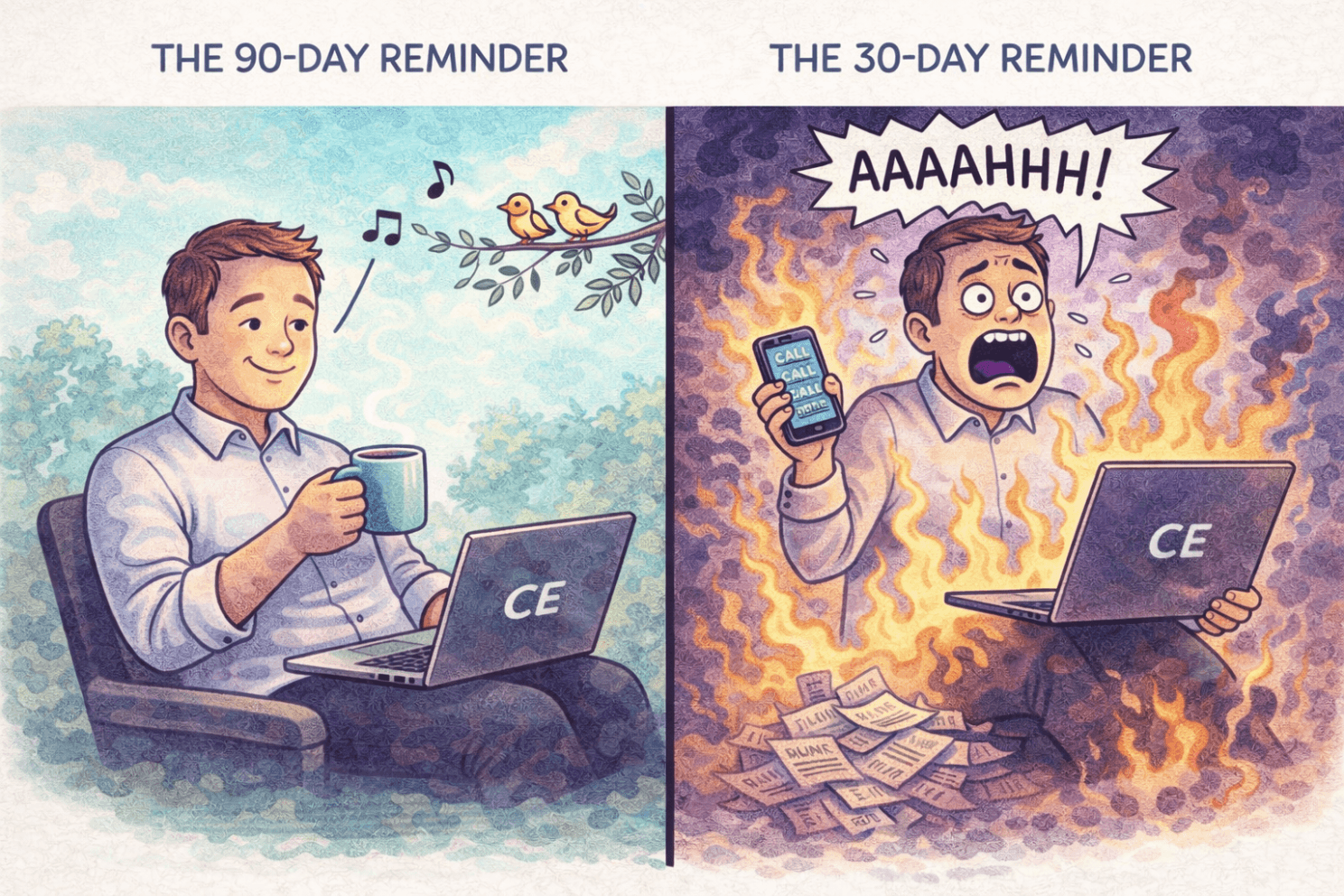
Set reminders 90 days before the deadline, not 30 days when it's already tight. But here's where most MGAs get stuck: you need a system that knows the difference between "general CE" and "ethics CE" and which states accept which courses. This stuff changes, and nobody has time to manually track it across twelve states.
Some modern compliance tools map state requirements to reporting periods automatically and flag producers before they're non-compliant—not after the state sends a letter.
But if you're paying enterprise prices for software that still requires you to manually look up each state's rules? That's not compliance automation—that's a searchable PDF with a subscription fee.
Even a well-organized spreadsheet works if you actually maintain it and know what you're tracking. The goal isn't perfection—it's eliminating surprises. You'll still have last-minute scrambles because producers are human and forget things. But they should be the exception, not the monthly fire drill where someone's scrambling to find a 3-hour ethics course that Florida will accept by Friday.
Most CE enforcement actions stem from timing, categorization, or reporting-period errors—not from producers failing to take courses at all.
Your turn
Have you ever had a producer insist they were compliant because they took a course—just not the right course for their state or requirement period? What state was it, and how long did it take to fix?
Authors: Michelle Bothe & Ido Deutsch
About Producerflow
Producerflow is a modern platform designed to simplify producer management for insurance carriers, MGAs, and large agencies. By centralizing onboarding, compliance, licensing, and data integrations, Producerflow helps teams reduce operational friction, mitigate regulatory risk, and scale distribution with confidence.
Published
